Hollywood Crush
- 4.6
- Rating
- 5.00M
- Installs
- Free
- Price

 Analysis by App-foxy
Hollywood Crush: Match3 puzzle caught my attention because it combines a familiar match-three format with a makeover-and-career theme. I went in expecting a light way to fill a few spare minutes, but the presentation gives each session a little more purpose than simply clearing a board. You match pieces, use the rewards to improve a character’s appearance and circumstances, and follow the rise of a small-town girl toward a more glamorous life. That loop is easy to understand, yet it has enough visual change to make the next level feel meaningful.
The game is free to download and sits in the casual game category, which is exactly where it belongs. It is made by VoyagerOne IE, has an average rating of 4.7 from around 76 thousand ratings, and has passed 5 million installs. Those numbers suggest that the basic formula has found a sizeable audience, but they do not automatically answer the more important question: does it remain enjoyable once the first burst of novelty disappears? My experience is that it can become a pleasant routine, although its long-term appeal depends heavily on how much you enjoy repeated puzzle sessions and gradual visual progression.
Why the first week feels so inviting
The opening appeal comes from the clarity of the core interaction. Match-three games work best when the board explains itself quickly, and Hollywood Crush does not require a long tutorial before you understand what to do. I could start a level, scan for possible combinations, make a move, and immediately see whether the board was opening up. That quick feedback makes the game suitable for short breaks, especially when I did not want to learn a complicated control scheme or manage a large collection of systems.
You May Also Like

 Google Keep - Notes and lists
Google Keep’s Quiet Growth Shows the Appeal of Simpler Notes
As mobile work gets busier, Google Keep keeps winning a simple contest: capture a thought quickly, find it later, and get on with the day.

 Blood Strike: 2.5 Anniversary
Blood Strike’s Loadouts Turn Every Drop Into a Tactical Gamble
A close look at Blood Strike’s custom loadouts: how fast access to signature weapons reshapes its battle royale rhythm, rewards preparation, and narrows the gap between fights.

 Pandora - Music & Podcasts
Pandora’s Music Is Easy to Start, but Harder to Recover
Pandora’s strength is its low-effort path from a seed to a station. Its weak spot is how much confidence it asks you to place in connection, setup, and quiet recovery.

 8 Ball Pool
 Is Built on Rivalries, Rematches, and Routine
A close look at the rivalries, rematches, shared routines, and unanswered safety questions that turn a quick pool match into a persistent mobile community.

 Samsung Music
’s Quiet Strength Is Playing What You Already Own
Its reach comes less from spectacle than from dependable access to a personal library. That simplicity is both the app’s strongest retention engine and its ceiling.

 AccuWeather: Weather Radar
AccuWeather Review: A Quick, Clear Forecast for Everyday Decisions
For everyday plans, the best forecast is the one you can understand quickly. AccuWeather makes rain timing, radar, and local conditions easy to act on, with a few trade-offs.
More From Our News Desk



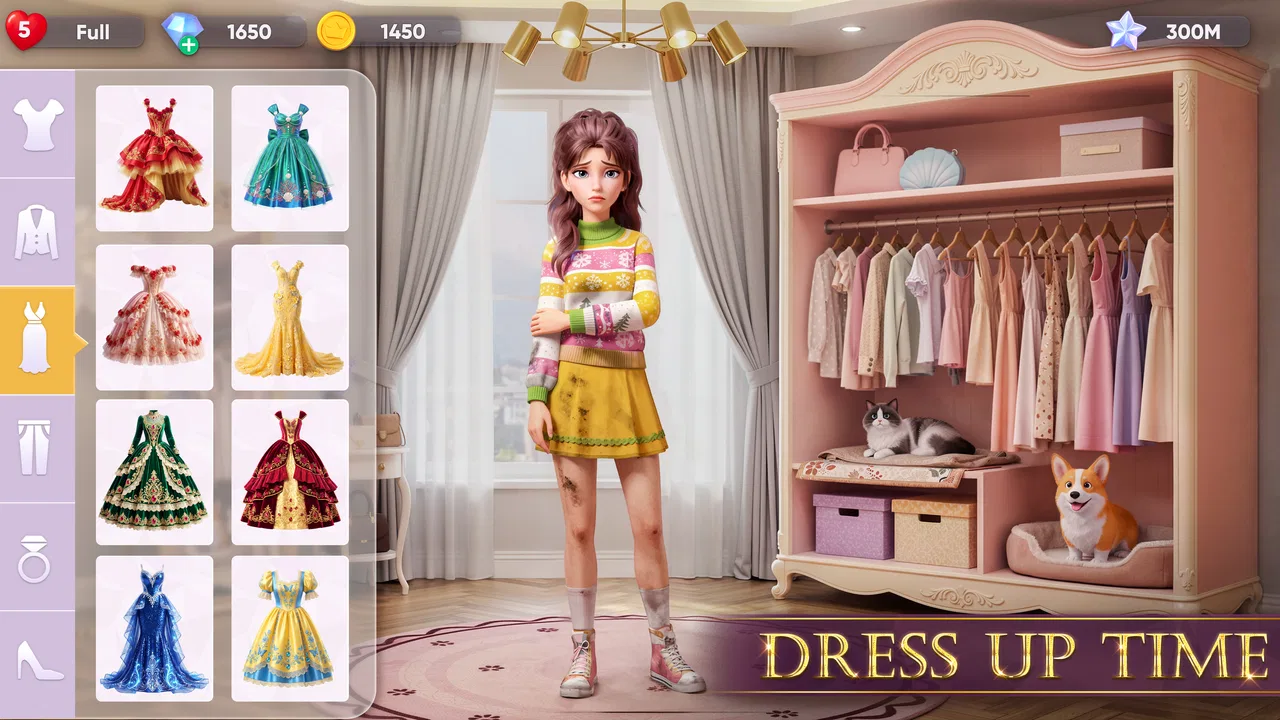
The dress-up angle gives the familiar puzzle loop a visible destination. Instead of treating every completed board as an isolated score, the game connects progress with the character’s changing image and ambitions. I found that especially useful during the first sessions because it gave me a reason to care about the rewards. The match-three board supplies the moment-to-moment action, while the styling and story elements provide the softer motivation between levels.
Its tone also makes it approachable for players who are not usually interested in competitive puzzle games. There is no need to study an elaborate strategy guide before starting. The age rating is Everyone 10+, so it is positioned as a broadly accessible experience rather than a niche title aimed at a mature audience. I would still keep an eye on younger players because the game includes in-app purchases, but the overall presentation is easy to approach.
During my first week, the strongest use case was the “waiting room” session: a few levels while waiting for an appointment, sitting on public transport, or taking a short pause between chores. The format supports that kind of fragmented play well. I did not need a long uninterrupted evening to feel that I had made progress. A handful of successful boards could lead to a new styling choice or another step in the character’s journey, which made short visits feel worthwhile.
The game’s current version is 0.1.1562, and that version label matters less as a feature than as a reminder that this is a product built around continued refinement. I would keep it updated through the normal app store process, particularly if I planned to make it part of a regular routine. A casual puzzle game lives or dies by how smoothly its repeated interactions feel, so small improvements to balance, stability, or presentation can matter more here than they would in a game played only once.
The first useful habit: spend attention before spending currency
One practical lesson I learned early is not to rush toward every optional improvement simply because it is available. In a game built around matching and visual rewards, it is tempting to treat each new choice as an immediate purchase or upgrade. I had a better experience when I played a few more boards first and decided which changes actually mattered to me. That approach keeps the puzzle side central and reduces the risk of turning the opening hours into a sequence of impulsive taps.
I also recommend treating the dress-up choices as a personal pacing tool. If a particular look does not appeal to you, there is little reason to hurry through a difficult board only to reach it. The most satisfying rhythm is to use the visual progression as a reward after a focused run of levels, not as pressure to clear every stage as quickly as possible. This is a small distinction, but it helps the game feel like entertainment rather than a checklist.
What gives it value after the novelty fades
After the first month, the question changes. The initial curiosity about the Hollywood journey is no longer enough on its own, so the match-three mechanics have to carry more of the experience. For me, the recurring value comes from the convenience of the format. I can return for a short session without remembering a complicated plot or rebuilding a strategy from scratch. The basic mental reset is simple: look at the board, identify useful matches, and make the next decision.
That simplicity is also the main trade-off. If you want a casual game that can become a dependable background habit, Hollywood Crush has the right shape. If you need constant mechanical invention, it may feel repetitive sooner than a deeper puzzle game. The dress-up progression changes the context around the boards, but it does not remove the repeated nature of matching pieces. I would describe the long-term loop as steady rather than endlessly surprising.
The game works best for players who enjoy visible progression without wanting a demanding role-playing system. You are not asked to memorize a large set of characters, build a complex team, or spend long periods arranging equipment. The appeal is more immediate: clear a puzzle, earn progress, and see the character’s world move forward. That makes it a good companion for casual players who like makeover themes but do not want a full simulation game.
Compared with a traditional match-three title that focuses almost entirely on scores and level completion, this game gives the wins a more personal frame. Compared with a dedicated dress-up game, it asks you to earn the next step through puzzle play rather than selecting outfits as the main activity. That middle position is its clearest identity. It will not fully replace a pure puzzle game for someone chasing difficult board design, and it will not replace a detailed fashion game for someone who wants extensive styling control, but it can bridge the two interests effectively.
A realistic month-to-month routine would be to open it during predictable gaps in the day rather than trying to force long sessions. I would play a few boards after lunch, during a commute, or before putting my phone away at night. That routine keeps the game from becoming an obligation. It also makes the progression easier to appreciate because each return has a clear purpose: finish a level, collect enough rewards for a choice, or simply unwind with familiar play.
How to make repeated sessions feel less automatic
My best advice is to vary the reason for opening the game. On one visit, I might focus on clearing boards efficiently; on another, I might play only until I have enough progress for the next visual change. This prevents every session from feeling like the same task. I also found it useful to stop after a frustrating run instead of immediately chasing a win. Because the game is designed for casual repetition, there is little benefit in letting one difficult stretch turn a relaxing break into an argument with the screen.
Another useful boundary is to separate entertainment time from purchase decisions. The presence of in-app purchases ranging from $0.99 to $99.99 per item means the game can invite spending at very different levels. I would decide on a personal limit before playing regularly, especially if the device is shared with a child. The free entry point is helpful, but “free” should not be confused with a completely cost-free experience once optional purchases become part of the routine.
For players who are sensitive to repetition, I would use the story and styling progression as a test. If the character’s transformation still gives you a small sense of anticipation after several weeks, the game may have lasting value. If you are already ignoring the makeover elements and seeing the boards only as obstacles, a more mechanically varied puzzle game will probably serve you better.
The maintenance burden of keeping it in a routine
Hollywood Crush is easy to maintain in the practical sense because its central activity does not demand a large time commitment. I do not need to reserve an evening for it, and I can return after a break without feeling completely lost. That low commitment is one of its strongest advantages over more elaborate casual games, where daily tasks, collections, and layered progression can make the act of keeping up feel like another job.
There is, however, a mental maintenance cost. Any game built around repeated rewards can become part of a habit before you decide whether you are still enjoying it. I would periodically ask myself whether I am opening it because I want a puzzle session or because I feel compelled to collect the next reward. That check is especially important for a game with optional purchases. The most sustainable way to play is to let the game fit around your day, not to reorganize your day around it.
Its casual design makes it suitable for uneven schedules. Someone with only a few minutes on weekdays can still engage with it, while a player with more free time can play longer when the mood strikes. I would not choose it as my only mobile game, though. Keeping a second option available—a word puzzle, a strategy title, or a more demanding match-three game—helps prevent the familiar board pattern from becoming stale.
The maintenance burden also depends on what you expect from the story. If you need a narrative that constantly delivers major twists, you may find the progression too light to justify regular returns. If you are happy with a gentle sense of advancement and visual change, the story can do its job without taking over the puzzle. I appreciated that balance during casual play, but I would not describe it as a substitute for a story-heavy adventure.
Where the free-to-play design needs discipline
The most important maintenance rule is financial rather than technical: decide in advance whether you will spend anything. The purchase range is wide, and the difference between a tiny optional payment and a much larger one can be significant. I would never hand the device to a child without discussing purchases first, even though the age rating is Everyone 10+. For an adult player, the simplest approach is to treat purchases as optional conveniences, not as part of the normal cost of every session.
I also recommend paying attention to how often you feel pushed to improve your progress immediately. A little impatience is normal in a progression game, but if the desire to advance starts replacing the pleasure of matching pieces, that is a useful signal to pause. The game is at its best when the puzzle itself remains enjoyable. Once progress becomes the only reason to continue, the free-to-play structure can feel more prominent than the Hollywood theme.
What may cause fatigue over time
The first source of fatigue is repetition. Match-three games naturally rely on recognizable actions, and Hollywood Crush is no exception. Even when the surrounding presentation changes, the player still spends much of the time examining a grid and searching for effective matches. I enjoyed that familiar rhythm in short bursts, but longer sessions made the repeated structure more noticeable.
The second source is the tension between creative styling and puzzle requirements. The makeover theme suggests freedom and personal expression, while the puzzle progression controls when new possibilities become available. Players who want to design every detail immediately may find that rhythm restrictive. I was comfortable with earning changes gradually, but I would choose a dedicated dress-up experience instead if outfit experimentation were my main priority.
A third issue is the possibility of progress feeling more important than play. When a level is difficult or the next reward is close, it is easy to focus on finishing rather than enjoying the decisions on the board. This is where short sessions help. I found that stopping after a few attempts protected the game’s relaxing quality better than repeatedly pushing through frustration.
The game may also be a poor fit for someone who wants deep competitive scoring, complex planning, or a large amount of strategic variety. Its appeal is approachable progression, not a demanding puzzle laboratory. Players who prefer to solve one intricate challenge for a long time may find more satisfaction in a dedicated logic game. Likewise, anyone looking for a substantial Hollywood simulation should keep expectations modest: this is a casual match-three game with a celebrity-rise theme, not a comprehensive entertainment-industry management experience.
There is a useful exception for social or family play. Although I would not treat it as a multiplayer substitute, the clear board format makes it easy to discuss moves with another person nearby. A friend can suggest a match, or a parent and child can take turns deciding which move looks best. That makes it more conversational than some solitary puzzle games, provided the adults keep the purchase boundaries clear.
My long-term verdict on keeping it installed
After weighing the routine against the repetition, I think Hollywood Crush earns lasting space for a specific kind of player: someone who wants an accessible puzzle game with a makeover journey, short-session flexibility, and a gentle sense of advancement. The combination is more distinctive than a plain match-three board, and the character’s rise gives ordinary wins a bit of emotional context. I can imagine returning to it regularly when I want something familiar but still want progress to look different from one visit to the next.
I would not recommend it as the only game on a phone, and I would not suggest it to someone who quickly tires of repeated matching. The styling theme cannot completely disguise the underlying repetition, and optional purchases require the same self-control as other free-to-play games. Players seeking deep strategy, extensive fashion customization, or a richer narrative should look elsewhere for their main experience.
For everyone else, the free starting point makes it easy to judge personally. Give it enough time to see whether the puzzle loop and visual progression complement each other for you, but do not mistake a strong first week for guaranteed long-term enjoyment. My own lasting impression is positive because the game fits naturally into small breaks and does not demand constant attention. Its value comes from being a pleasant repeatable habit, not from reinventing the genre.
My recommendation is simple: try it if you like match-three puzzles and want your wins connected to a character makeover story, then set clear limits around session length and purchases. When those boundaries are in place, Hollywood Crush: Match3 puzzle can remain a comfortable casual companion after the opening novelty fades. It is not the deepest option in either puzzles or dress-up, but its blend is focused, approachable, and easy to return to when I want a quick bit of progress.
FAQs for Hollywood Crush
01What is Hollywood Crush: Match3 Puzzle about?
Hollywood Crush: Match3 Puzzle is a vibrant and addictive game that combines match-3 mechanics with Hollywood-themed challenges. Players can enjoy engaging levels where they match gems to help characters achieve their dreams of stardom. The game features various quests and creative obstacles set against the backdrop of the glamorous world of Hollywood.
02Are there any in-app purchases in Hollywood Crush: Match3 Puzzle?
Yes, Hollywood Crush: Match3 Puzzle offers in-app purchases. Players can buy boosters, extra lives, and other enhancements to progress more quickly or to overcome challenging levels. While the game is free to download and play, these optional purchases can enhance the gaming experience for those who choose to use them.
03Can Hollywood Crush: Match3 Puzzle be played offline?
Hollywood Crush: Match3 Puzzle requires an internet connection to download and initially set up the game. However, once installed, it can be played offline, allowing players to enjoy the game anywhere without worrying about connectivity issues. Some features, such as leaderboards and certain events, may require an internet connection.
04What makes Hollywood Crush: Match3 Puzzle different from other match-3 games?
Hollywood Crush: Match3 Puzzle stands out due to its unique Hollywood theme and storyline. Unlike typical match-3 games, it incorporates elements of celebrity life and fame, with characters and quests that are designed around achieving stardom. This thematic twist adds an extra layer of engagement and fun for players who enjoy both puzzles and the allure of Hollywood.
05How frequently are new levels added to Hollywood Crush: Match3 Puzzle?
The developers of Hollywood Crush: Match3 Puzzle are committed to keeping the game fresh and exciting. New levels and challenges are added regularly, ensuring that players always have something new to explore. Updates often include seasonal events and limited-time challenges, which keep the gameplay dynamic and engaging for both new and returning players.
Pros
- Engaging gameplay with vibrant graphics.
- Frequent updates with new levels.
- Intuitive controls for easy play.
- Offline mode available for travel.
- Rewarding daily challenges.
Cons
- In-app purchases can be pricey.
- Occasional ads interrupt gameplay.
- Limited lives slow progress.
- Requires constant internet for updates.
- Some levels feel repetitively challenging.

Hollywood Crush
Gallery